
Humanity United for Universal Demilitarization.
A World Without Armed Forces. A Future with Peace.
Peace Needs No Army.
STOP THE PRESS! LATEST NEWS
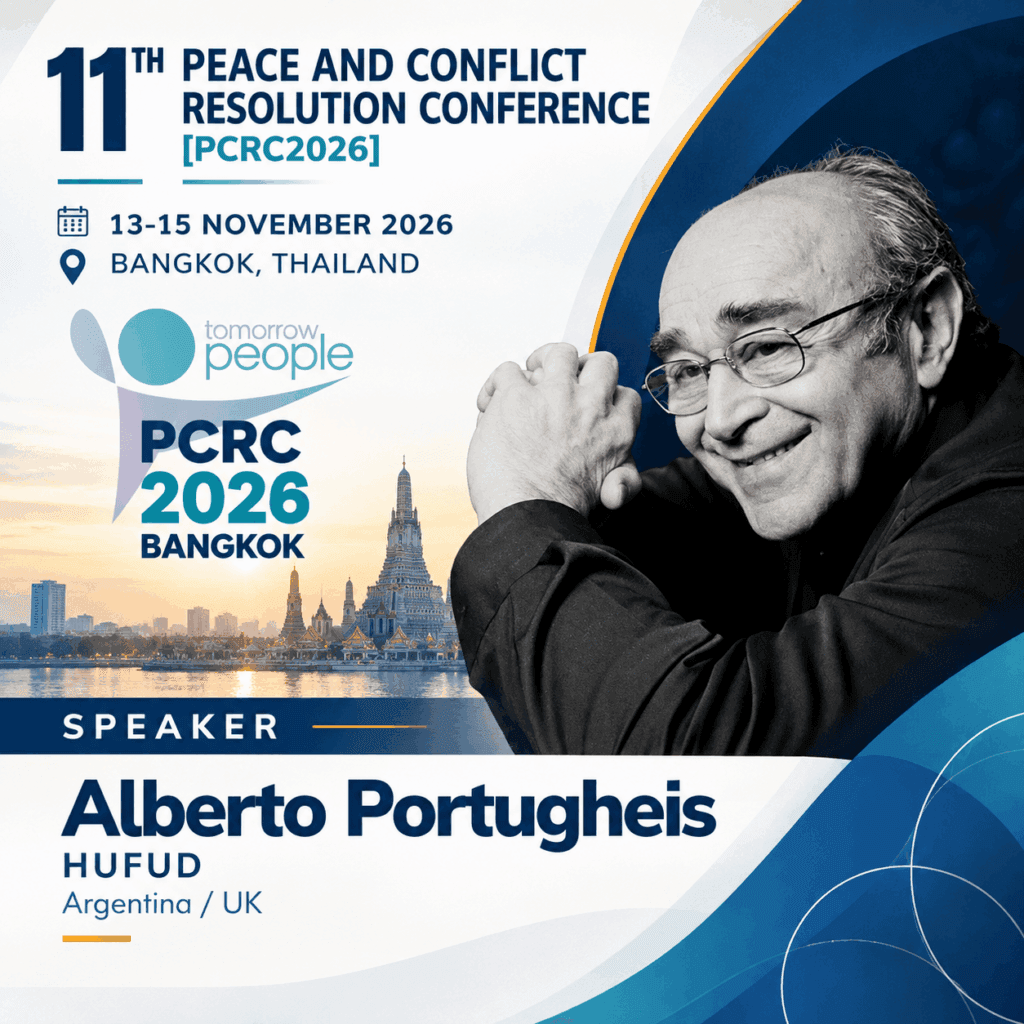
HUFUD FOUNDER & PRESIDENT INVITED TO SPEAK AT PCRC 2026
HUFUD is pleased to announce that our Founder and President, Alberto Portugheis, has been invited to speak at the 11th Peace and Conflict Resolution Conference (PCRC2026).
13–15 November 2026
Bangkok, Thailand
Organised by Tomorrow People Organization
The conference will bring together participants from different parts of the world to engage on important issues surrounding peace and conflict resolution.
HUFUD is very pleased to be represented by our Founder and President at this international gathering and looks forward to his contribution to the conference.
LETTERS BY ALBERTO PORTUGHEIS
OPEN LETTER to Global GeoPolitics
Your article "Why Europe Blinked: The Russian Billions It Cannot Touch" is excellent and truthful, but deep down, Europe knew from the beginning they'll be 'blinking'. Relationships between Europe and Russia have to 'appear' to be bad, otherwise military threats,...
OPEN LETTER to Global GeoPolitics
For GG the Decline of Europe is Not a Failure of The Plan. It is The Plan. To HUFUD the "Plan" is World War III. This demands the decline of Europe, as of other continents. And blame yourselves instead of blaming those responsible for ensuring the millions of workers...
OPEN LETTER to Global GeoPolitics
Excellent article and your statement "....the working class bears the costs" is a great truth. But blame the working class this situation, starting with the workers in the war industry. Workers who make a living making weapons, missiles, explosives, vehicles of of...
Open Letter to Mr Derek Walker, Future Generations Commissioner for Wales, UK
Dear Derek Walker, The solution is: the Universal Abolition of Militarism. That is: the end, forever of the Armed Forces and the War (Death amp; Destruction) industry. Even without wars, artillery testing by manufacturers, and Armed Forces daily training is enough to...
OPEN LETTER to Global GeoPolitics
GG, who told you the Economy “grows”??? Military ‘expenditure’ destroys all Economies. Even without getting involved in wars, the money borrowed or printed to order to keep slaves (Armed Forces) ready to irresponsibly, tragically and innocently kill and die for...
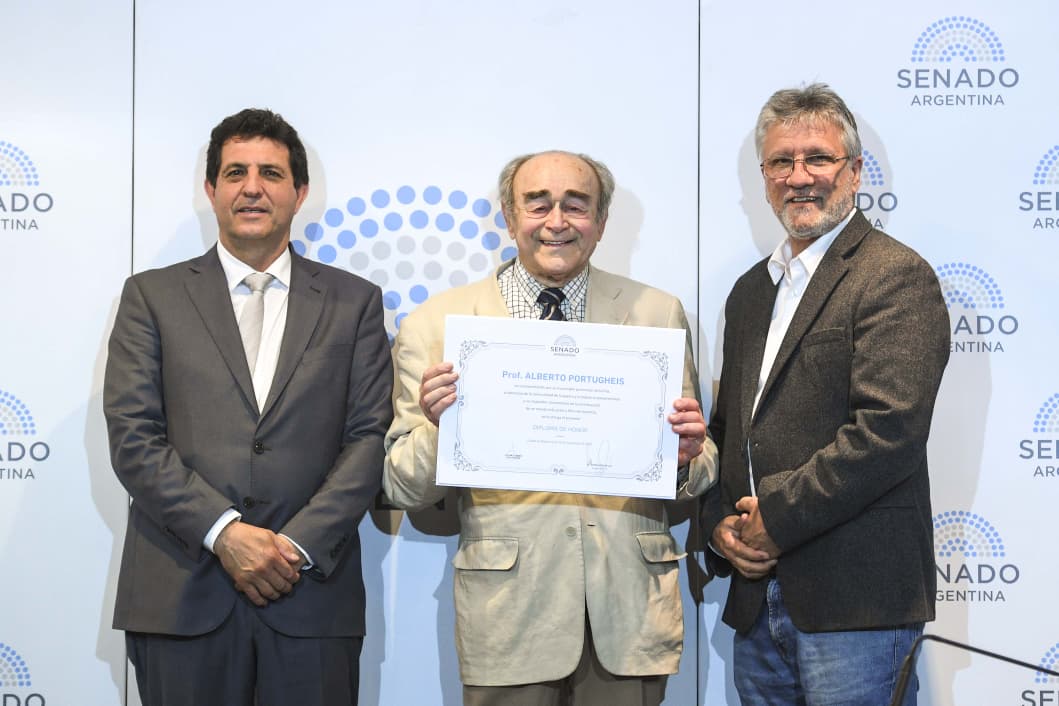
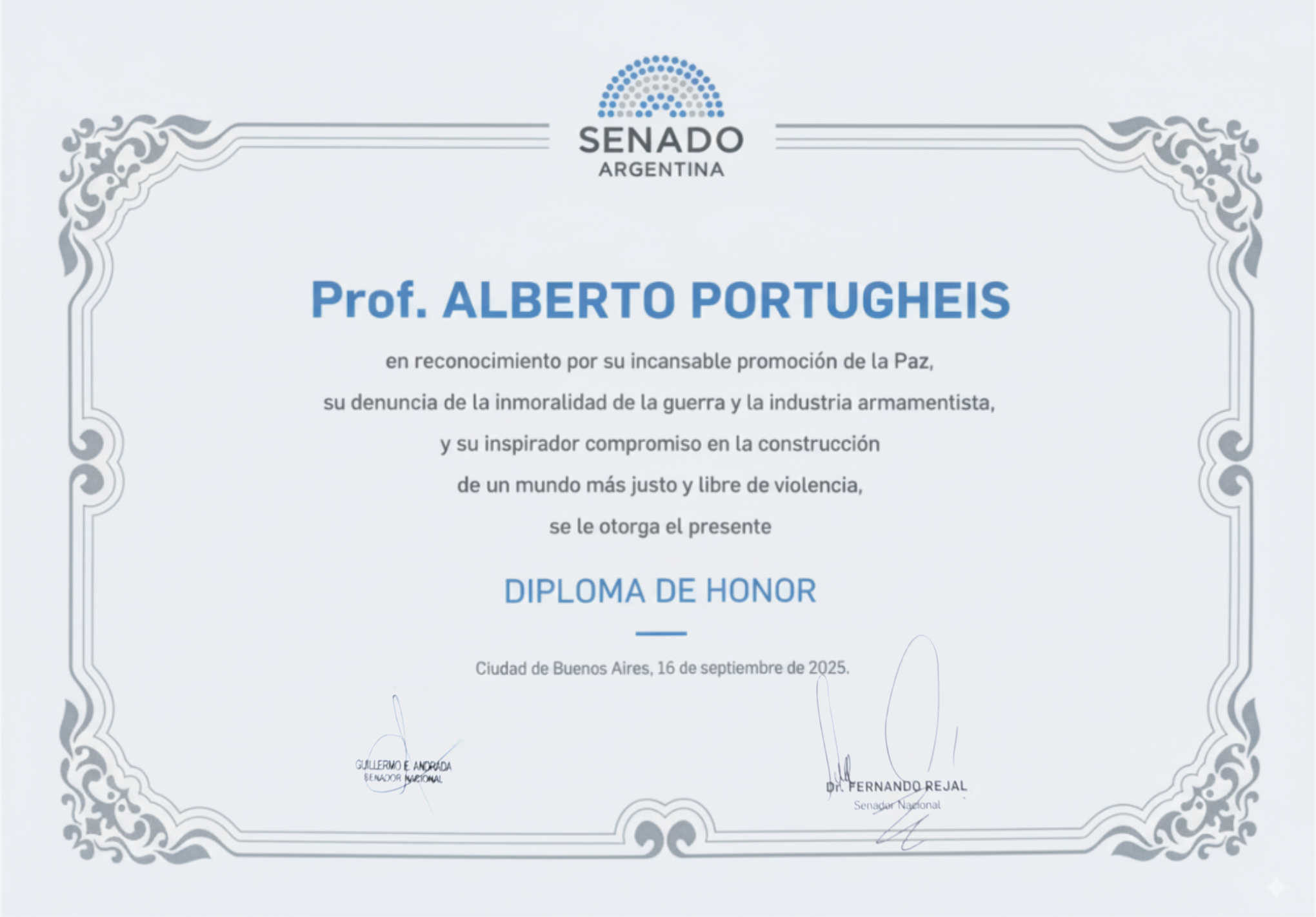
Senate of Argentina
Prof. ALBERTO PORTUGHEIS
in recognition of his tireless promotion of Peace,
his denunciation of the immorality of war and the arms industry,
and his inspiring commitment to building
a fairer and violence-free world,
is hereby awarded this
DIPLOMA OF HONOUR
City of Buenos Aires, September 16, 2025
SIGNED by Senators Guillermo Andrada and Fernando Rejal
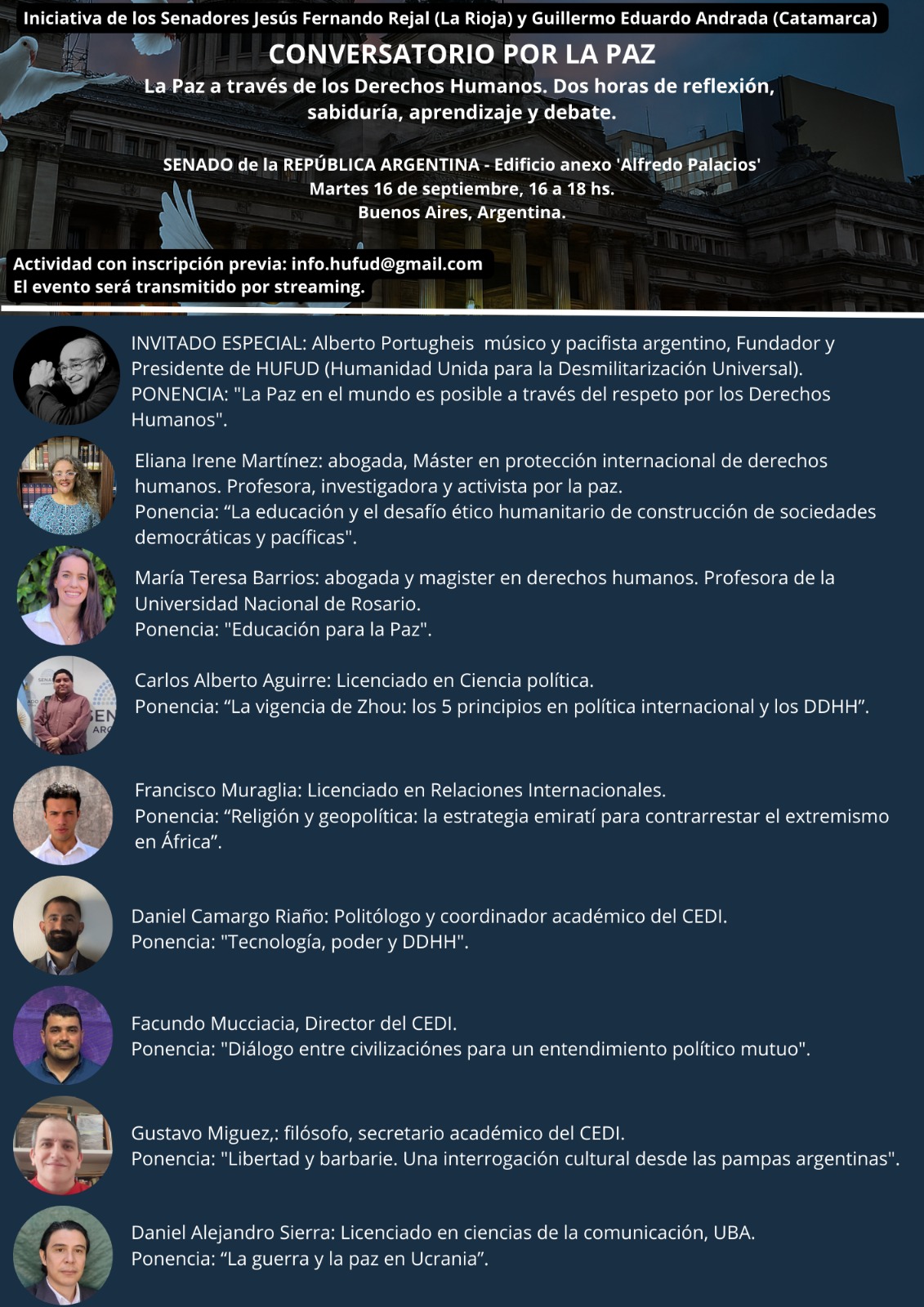
FORUM FOR PEACE 2025
Buenos Aires, Argentina
16 September, 4 – 6pm
At the initiative of Senators Jesús Fernando Rejal (La Rioja) and Guillermo Eduardo Andrada (Catamarca)
STREAMING
https://www.youtube.com/live/5qXpu6_gEh4
Registration: https://www.eventbrite.com/e/conversatorio-por-la-paz-tickets-1587801279369
STOP PRESS! URGENT APPEAL
________________________________________________________________________
BAKU City, Azerbaijan 2 – 3 July 2025
Hello friends of HUFUD and Peace,
The link below leads you to the full programme of courses and other events organised by IPD, the Institute for Peace and Dialogue and its Managing Director, Fakhrinur Huseynli. Once you load the page, at the bottom you’ll see the details of my 2-day course.
I hope to see some of you in the beautiful and historic Baku.
Alberto
________________________________________________________________________
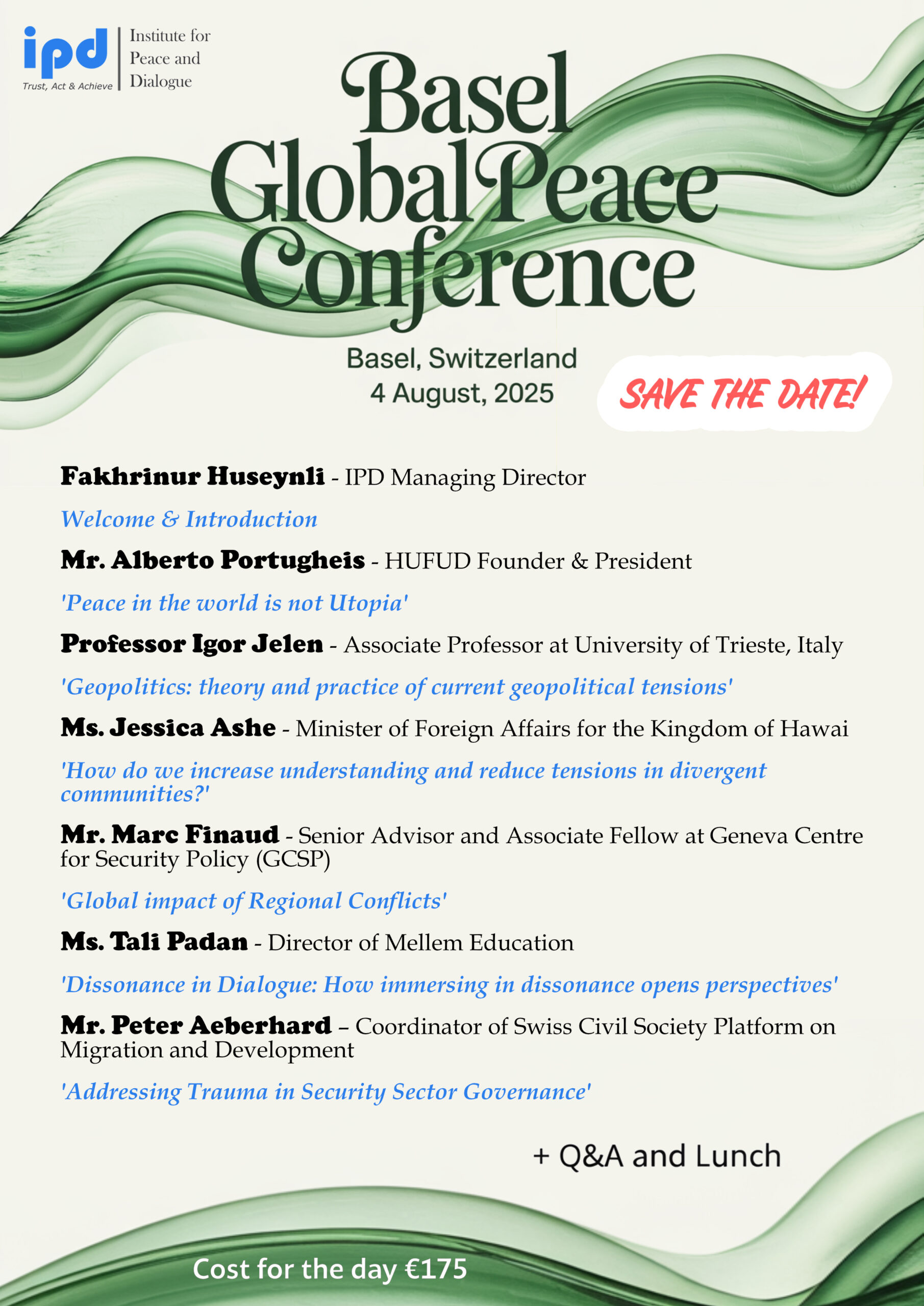
Dear friends of Peace, I hope to see many of you at what promises to be a very absorbing, engaging and educational event, happening in beautiful Basel, Switzerland
Early bird application deadline is end of April 2025
HUFUD’s President reacts to an interview by Pascal Lottaz to two well-known Peace activists
“Peace Activism, extremely active since the birth of the first international Peace organization, IPB (International Peace Bureau), 134 years ago, (and now we have 75,000 Peace NGO’s with 42,000 active) cannot Prevent Self-Destruction, complete or partial ! Simply because Peace activists don’t seek an end to conflict. Peace activists think that politicians don’t know how to prevent war and that they should be educated.
Peace activists don’t consider the fact that Governments are the only authority allowed to own slaves (Armed Forces) to train them in the Art of fighting, maiming, torturing, killing, and destroying (buildings, families, societies, Nature and the economy). Governments are the only authority allowed to give orders to the Armed Forces to go to war, to kill and to die.
The same politicians have the duty to ensure that the thousands of workers in the war industry don’t lose their jobs. For this, the machine guns, bullets, grenades, landmines, bombs, rocket launchers, guided and cruise missiles, torpedoes, tanks, bombing helicopters and drones, air-fighters and warships, torture instruments, military uniforms they produce must be sold and used, damaged, destroyed, so that the industry can keep producing.
Politicians are not magicians or miracle producers, which is what Peace Activists seem to think. Politicians cannot promote military trading and training, and military “inactivity” at the same time. An oxymoron.
Neither the War industry nor religious corporations can be seen involved in promoting war, so they both use politicians to achieve their financial needs and ambitions.”


Original article https://gazzettadiplomatica.it/premio-books-for-peace-2025-alla-premio-nobel-per-la-pace-2003-ms-shirin-ebadi/


________________________________________________________________________
I’m very happy to welcome at my concert the Nobel Peace Prize winner Shirin Ebadi and Professor Antonio Imeneo, President of Books for Peace


@albertoportugheis presentation by Alberto Portugheis
WORLD PEACE SUMMIT 2024
@hufud_oficial facebook.com/hufud
Both official violence—wars—and civil violence continue to escalate worldwide. HUFUD and APL
Argentina feel the urgent need to call on organizations and individuals in Spanish-speaking countries
who work for Peace, Human Rights, and the protection of the planet to attend the World Peace Summit,
to be held at the headquarters of the Legislative Staff Association of Argentina on Monday, November 25,
2024
Politicians, diplomats, economists are welcome. All interested in making a presentation, please send your proposal as soon as possible to info.hufud@gmail.com
Address:
Combate de los Pozos 230 (Balvanera – C.P. 1080)
Nearest subway station: Congreso (A Line)
Book your spot at the summit!

Speakers (in alphabetical order):
Raúl Nicolás Amato | “Spiral of Life. A Dynamic to Achieve Peace and Unity Goals” | *Graduate in Strategic Prospective. Founding Member of the Argentine Network for Future Studies (RAEF). Transdisciplinary Researcher and Futurist. Author of the book “Times of Transformation, a New Worldview for All of Humanity”, which proposes a systemic approach to Time, Consciousness, Fractal Geometry, Biology, and Quantum Physics. Member of the Coordinating Team of the Peace Council of the Argentine Republic. Peace Ambassador (named by the Thousand Millennia of Peace and P.E.A.-Peace, Ecology and Art- foundations). Co-founder of the First Conscious Politics Congress. Co-producer of the radio/streaming program Creative Politics.

Maria Teresa Barrios | “Rosario, Cradle of Peace” | Maria Teresa Barrios is an Argentine lawyer and peace educator. She is Co-founder and President of the Ibero-American Alliance for Peace and delegate of Argentina to the Global Campaign for Peace Education (GCPE). She is a mediator and trainer in positive conflict transformation at the Ministry of Social Development of the province of Santa Fe and representative of Argentina for the youth group of the International Peace Bureau. She is also one of the organizers of the Ibero-American Forum for Peace.

Felipe Bosch | “Building Futures of Peace: The Role of Youth in Transforming Global Governance and New Democratic Agreements” | *Bachelor’s in Geography and Economics from University Paris 1 Panthéon Sorbonne. Master’s in Urban Studies from El Colegio de México and Sciences Po Paris. Co-founder and analyst of the Americas Program at Groupe d’études géopolitiques (GEG) and former managing editor of the Spanish edition of their magazine Le Grand Continent. Currently Executive Director of the Intergenerational Center for Global Action (ICGA), LAC Networks Weaver at School of International Futures (SOIF) and team member of Arianna Vannini, Chief Economist and Principal Strategic Foresight Advisor in the International Partnerships Directorate General (DG INTPA) of the European Commission.

Professor Doctor Alicia Cabezudo | “Education for the Construction of a Culture of Peace: Urgent Challenge of Our Time” | Her area of specialization is Peace Education, Democracy, Citizenship and Human Rights, on which she develops training, research and extension activities. In the last twenty-five years she has developed activities in educator training, social leaders and public servants – developing her courses in numerous Latin American and European universities. She is Emeritus Professor in Methodology and Teaching of Social Sciences at the School of Education of the National University of Rosario / Argentina and of the UNESCO Chair of Peace Culture and Human Rights at the National University of Buenos Aires, directed by Nobel Peace Prize winner – Architect Adolfo Pérez Esquivel, as well as the OSVALDO BAYER Chair at the same University. Her current field of work focuses on the analysis of public and university policies linked to educational programs for the construction of Peace, Citizenship, Human Rights and Conflict Resolution. Since January 2018 she resides and works in Colombia – being appointed Pedagogical Coordinator of research projects on educational practices and teacher training in areas of conflict and post-armed conflict, promoted by the Network of Universities for Peace and the national government. Currently a professor at the University of Cartagena de Indias and various academic centers in Colombia, Latin America and Europe, also directing territorial projects for international organizations. She is a pedagogical consultant for the Colombian Truth Commission – CEV and instructor of Teachers and Professors in Pedagogy for the dissemination of the Commission’s Report, published in June 2022 and adopted by the current Colombian government under the conceptual axis of TOTAL PEACE. Former Vice President of the International Peace Bureau – IPB Berlin, she is currently General Coordinator for Latin America and the Caribbean of the Global Alliance for Ministries & Infrastructures for Peace – GAMIP, which covers 14 countries in the region with over 103 members. She has a large number of articles, essays, publications of various levels and books on her specialty.

Daniel Camargo Riaño | “Description of the Western Military-Industrial Complex and New Technologies” | Daniel Camargo Riaño, Political Science graduate from the University of Buenos Aires, is a university professor, geopolitics and international relations analyst with a focus on industry 4.0 and technology management. Currently pursuing a master’s in Technology Management at the University of Avellaneda and specializations in Contemporary Studies of America and Europe, and International Relations. Also an analyst at Opinion Matrix (Barcelona) and technology columnist for the Center for Integral Development Studies (CEDI). His research covers artificial intelligence regulation, the impact of data science on electoral systems, and social control through algorithms.

Irupé Christeller. Buenos Aires – Argentina. | “World Peace is Possible! Voices and Looks of Children from our SIGLO NUEVO Primary School” | Member of the Pio Roncoroni Foundation, in charge of the “School of the New Century” and its project of “Global Education for Peace and Planetary Consciousness”. Artist and social activist, committed to the rights of children, women, elderly people, the environment, and every being in a vulnerable situation. Trained in Anthropological Sciences (UBA). Member of the Peace Council of the Argentine Republic.

Manuel Ricardo Daer | “Falkland Islands Combat Veteran APL” | Bachelor’s Degree in Public and Municipal Administration – legislative worker since 5/1/1984 at the National Chamber of Deputies – served as Head of Supplies (2009-2013) and Deputy Director of Administration of the General Administrative Accounting Department of the HCDN – member of the APL Falklands Veterans Commission since 2001 and currently its President. Completed military service from March 1981 until June 25, 1982. Arrived in the Falkland Islands on April 10 and was stationed at the southern beach of Port Stanley – East Falkland – and returned from the war as a prisoner on the cruise ship Canberra on June 19 to Puerto Madryn (the day Puerto Madryn ran out of bread)

María Pía Devoto | “The Impact of Firearms: Debunking Myths” | María Pía Devoto is Director of the Association for Public Policies (APP), specialist in international security and non-proliferation, disarmament, arms control, and gender; performs advocacy, analysis, and is an active member of various civil society networks. Founding member of the Argentine Disarmament Network (RAD); of the Human Security Network of Latin America and the Caribbean (SEHLAC), of which she is coordinator and member of the governing bodies of ICBL/CMC, ICAN, INEW and president of StopKillerRobots, and focal point for the Gender Equality Network on Small Arms (GENSAC). Teaches “International Negotiation” at Austral University and organizes original role-playing negotiation games. Participates as a speaker in International Organizations (United Nations), Regional Organizations (Organization of American States) and national organizations, Universities, Research Institutes and civil society organizations. Received the United Nations Disarmament Award in 2013 on behalf of RAD, was elected 2015/2016/2020 as a distinguished woman in the field of Disarmament by the United Nations and received, as part of ICAN, the Nobel Peace Prize in 2017 for anti-nuclear work. Author of numerous articles, including recent publications: Maria Pia Devoto, Ana Levintan, Mariel Lucero, March 2024, “Foreign policy, gender, nuclear disarmament and the environment: Perspectives from the South” UNIDIR — UN Institute for Disarmament Research, https://lnkd.in/d2-iuSeM – Maria Pia Devoto, Ana Levintan, March 2024, “The Historical Impact of Parliamentary Diplomacy on Disarmament”, UNODA, https://bit.ly/APP_UNODA

Alexandra Diaz Ramirez, Cali- Colombia| “Women First” | Psychologist, Master’s student in Anthropology. Social activist for human rights and women’s rights. Founder and representative of the Seed Woman Association comprised of indigenous and peasant women from the Colombian Amazon. Currently field coordinator of the Redd+ Mataven project. Has worked in Colombia and Ecuador for social transformation in pedagogical projects for peace building, social justice and gender equity.

Silvia del Rosario Giacoppo | “Challenges of World Peace” | Education: Lawyer with Master’s in Family Law. Professor | Argentine Political and Parliamentary: Activist and leader of the Radical Civic Union political party. Mayor of the City of Monterrico. National Senator for the Province of Jujuy (M.C.) – (2015-2023). Member of the Judiciary Council of the Argentine National Judicial Power (M.C.). President of the Tourism Commission of the Argentine National Senate (M.C.). Highlighted three times for best parliamentary work in the Argentine National Senate. | International Framework: Alternate Secretary of Commissions and Focal Point of the Regional Organism with the Food and Agriculture Organization of the United Nations (FAO) (M.C.). Member of the Board of ParlAmericas as a representative of South America (M.C.). President of Parlatino (Latin American and Caribbean Parliament) (M.C.). Vice President of the European-Latin American Parliamentary Assembly (EUROLAT) (M.C.). Member of the Parliamentary Front Against Hunger in Latin America and the Caribbean, leading the Argentine chapter. (M.C.). Honorary Member of the Republic of San Marino, assigned with the Order of Saint Agatha.

Eliana Martínez | “Phenomenology of Peace: Implications for Contemporary International Law” | Eliana Irene Martínez, University Professor, researcher, activist and peace builder, PhD candidate in Law at the University of Alcalá, Madrid (Spain). Lawyer and Mediator; Master’s in Human Rights Protection at the University of Alcalá, Madrid (UAH); Expert in Application of International Law, Autonomous University of Madrid. Regional Coordinator, Central Region, Federal Network of Studies on the Human Right to Peace (ReFEPAZ- COFEI); founding member of the Ibero-American Network of International Human Rights Protection (RedIPIDH). Expert Professor of Public International Law, University Siglo XXI, Professor in charge of “Contemporary Armed Conflicts, Human Rights and Peace Building”, National University of Córdoba.

Alberto Portugheis | “World Peace is Possible” | Alberto Portugheis, professional musician, is a passionate pacifist, determined to end forever the immorality of wars and their business, demonstrating how the only way to live in Peace is to prevent the military industry and Armed Forces from eliminating us from the planet. It is humanity who must first eliminate Militarism. Alberto is founder and president of HUFUD (Humanity United for Universal Demilitarisation), whose honorary president is pianist Martha Argerich.

Elina Elisabet Temporetti | “Adding Actions for a World without Violence” | -Board of Directors of APL -President of the Equal Opportunities and Treatment Commission-, which depends on the Women’s Secretariat of APL. -Member of the Interdisciplinary Team of the Women’s Secretariat for Assistance in Labor Violence Cases. -In the Honorable Senate of the Nation, currently Department Head of the Interior Security and Drug Trafficking Commission. Courses Studied: -Higher Technician in Legislative Administration -Bachelor’s in Public and Municipal Administration -Diploma in Prevention of Addictions in the Workplace, at the Faculty of Medicine of UBA. -Diploma in Gender, Violence and Human Trafficking for Sexual Exploitation, given by the Women’s Office of the Supreme Court of Justice of the Nation. -Courses in Labor Violence at the Ministry of Labor, Employment and Social Security of the Nation, through the Labor Violence Care Office (OAVL), previously at INAM. -Territorial Replicator for the Ministry of Women, Gender and Diversity of the Nation (where I am currently taking several online courses) -Actively participates in the Inter-Union Network against Labor Violence made up of more than a hundred unions, where she was part of the Interdisciplinary Team that prepared the Survey on Labor Violence at the Federal Level, with the participation of the University of Avellaneda (UNDAV) and in collaboration with the Spotlight Initiative of the ILO. -Part of the Organization Team of the 1st Congress of the National Inter-Union Network against Labor Violence held in the City of Mar del Plata September 2023.

November 25, 2024
Summit Program:
9 am – Doors open for registration and coffee
10 am – Summit begins
1-2 pm – Lunch
2 pm – Afternoon session begins. Until 5 pm.
5:15 pm – Farewell wine
FIRESIDE CHAT ON
Dear friends of Peace, l hope many of you will join me on Sunday and support my efforts to transform marvellous Africa in a modern, just, prosperous and peaceful continent.
Kindly register to join the conversation here

PITY THE NATION
The perfectly descriptive poem, below, sent by my great friend Norma Procter, herself a poet, writer, painter, Human Rights campaigner and editor of one of my books, is a poem I’d call PITY THE NATIONS, in plural. This is because people in all countries in the world are led, like sheep, to believe that humanity needs a war industry and Armed Forces to fight – most of the time against their will – with the produce of this Business of Death and Destruction.

INTERNATIONAL SUMMIT
FOR WORLD PEACE
25th and 26 November 2023, Argentina
In view of an escalation in the number of wars, small and large, short and long, and general social violence in the world, HUFUD feels the urgent need to summon up all Peace, Human Rights, anti-war, anti-military and planet protecting organizations, worldwide, to the two-day INTERNATIONAL SUMMIT FOR WORLD PEACE at the School of the New Century in Buenos Aires, Argentina, on 25th and 26th November 2023
All participating organizations or Movements will be expected to actively present their Peace proposals. The event will culminate with a debate between the representatives of each organization present as well as with members of the audience. We aim to create an International Peace THINK TANK
The Summit will be live-streamed worldwide
If your organization or Movement, or you as an individual wish to be part of this unique event, please contact us as soon as possible by e-mail to info.hufud@gmail.com
Gu

HUFUD News!
About HUFUD
HUFUD is a member organisation of the International Peace Bureau and the Network for Peace.


XR – Extinction Rebellion
BIG Event at Westminster, London, from 21st to 24th April 2023

Alberto Portugheis speaking in front of the Ministry of Defence or MOD, which Alberto variously calls Ministry of Death or Ministry of Destruction.


HUFUD’s banner in front of the Ministry of Defence or as Alberto Portugheis likes to call it “Ministry of Death”.

The press officer – Katarina Spisakova
Blog
OPEN LETTER to Global GeoPolitics
Your article “Why Europe Blinked: The Russian Billions It Cannot Touch” is excellent and truthful, but deep down, Europe knew from the beginning they’ll be ‘blinking’. Relationships between Europe and Russia have to ‘appear’ to be bad, otherwise military threats, attacks and expenditure, cannot be produced.
Alberto Portugheis
HUFUD Founder & President
https://hufud.org/
‘Peace is Possible’ Conference 2019
We are tremendously grateful for all participants at the HUFUD Peace is Possible Conference which took place on 17 June 2019. If you would like to be notified about future activities, please subscribe to the HUFUD Newsletter below. We look forward to your joining us next time.

Professor Dave Webb, CND Chair, on how we CAN ban the bomb through international treaties and linking efforts with other campaigns.

John Leech OBE

Josephine Apira shares the reality about her homeland, Uganda.

Dr. Victor Olisa QPM on peace beginning at ‘home’.

HUFUD volunteer Ayessha Ghulati

Mic Dixon, director of ‘War School’ takes questions about his film.

Loussin-Torah Pilikian moderates the conference.

Alberto Portugheis, HUFUD Founder and President


Marv Radio

Conference ‘The game of war and a path to peace’
Support us


Martha Argerich
Hon. President

Bruno Kasenge
Director of HUFUD Africa

Alberto Portugheis
Founder and President
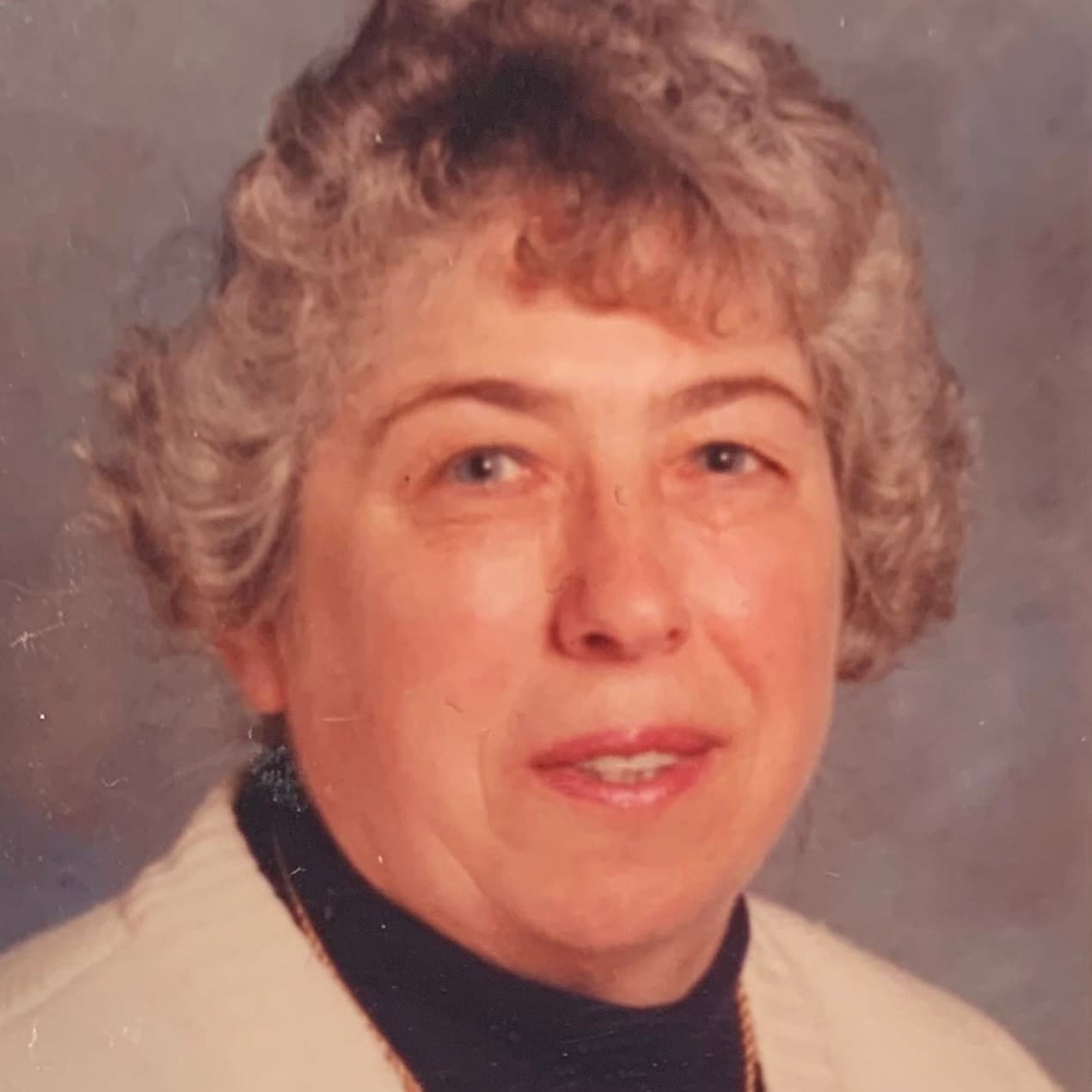
Barbara Lister
Honorary Patron
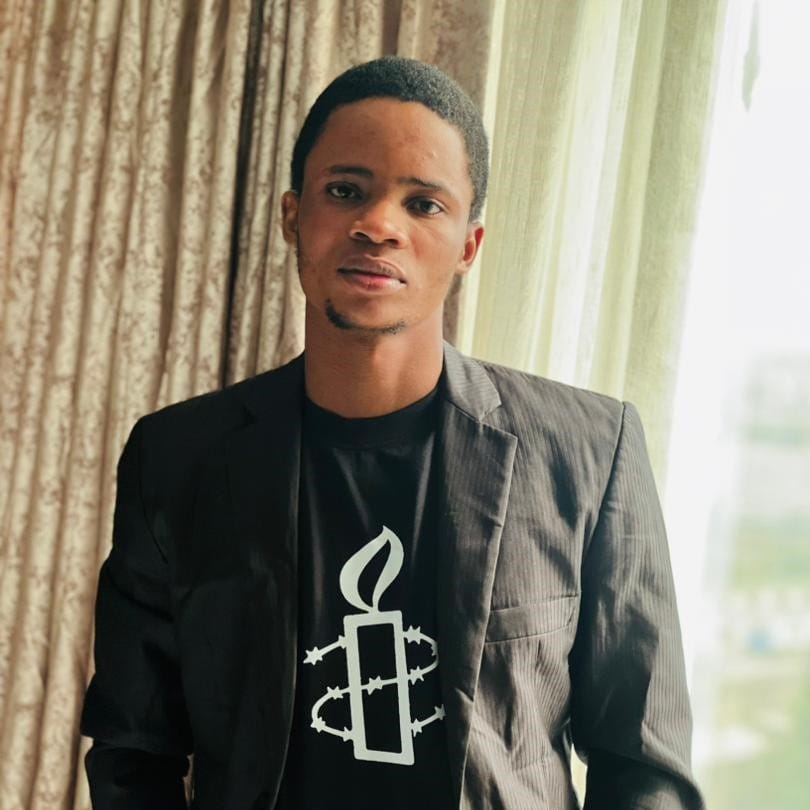
Oluwatosin Samuel Ojo
Social Media Manager
Partnership
HUFUD was founded by Alberto Portugheis, to promote World Peace through Universal Demilitarisation. We are seeking peace practitioners, peace professors, public officials, Peace Studies students and Peace journalists, to cooperate with us, to transform our network into a strong voice and force. Contact us at info.hufud@gmail.com

Subscribe to our Newsletter
Support Us
Contact: info.hufud@gmail.com
